
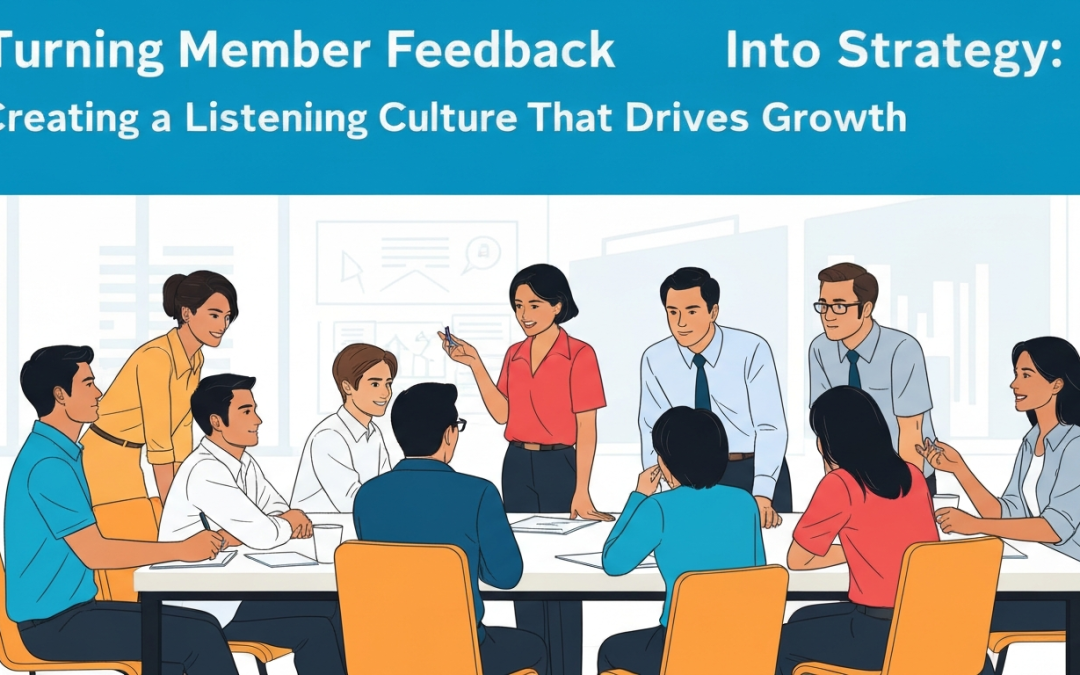
Why listening to members matters for growth
In any organization, the people who interact with your product, service, or community are a goldmine of insight. When you turn their feedback into a deliberate, actionable strategy, you don’t just fix problems—you align your entire team around what truly matters. A listening culture isn’t a one-time survey; it’s a disciplined practice that informs priorities, accelerates learning, and fuels sustainable growth.
Build a foundation: redefine success through listening
Define what you want to learn and how you will use it. Start with clear questions like: What features delight members? Where do they stumble? What unspoken needs are emerging? Create a shared vocabulary for feedback so every team speaks the same language when discussing customer problems and opportunities.
Collect feedback with intention
Design feedback loops that are easy to use and representative of your member base. Combine qualitative and quantitative signals to get complete picture:
- Surveys that balance depth with brevity, and are sent at meaningful moments in the member journey.
- In-product prompts and usage data to surface behavior, not just opinions.
- Community forums, AMAs, and open-ended channels that invite candid discussion.
- Direct conversations with diverse member segments to capture varied perspectives.
Turn raw input into structured insight
Raw feedback is just a starting point. Use a simple, repeatable process to transform it into actionable items:
- Tag and categorize feedback by problem area, impact, and urgency.
- Look for patterns across segments and time to distinguish outliers from trends.
- Prioritize using criteria that matter to growth—impact on retention, activation, and monetization.
- Translate insights into concrete hypotheses and potential experiments.
From insight to strategy: roadmapping with feedback at the center
Integrate member insights into the strategic planning process so every initiative has a defensible reason rooted in user needs. A few practical steps:
- Create a living backlog that links each item to a member need and a measurable outcome.
- Balance quick wins with long-term bets to maintain momentum while addressing core issues.
- Allocate ownership to cross-functional teams to accelerate execution and accountability.
- Publish a transparent impact dashboard showing what was learned, what was changed, and why.
Build a culture of listening, not just data collection
A true listening culture lives in behavior, not dashboards. Encourage curiosity, humility, and collaboration across departments:
- Leadership models listening: acknowledge feedback, explain decisions, and share outcomes.
- Cross-functional rituals, like monthly feedback reviews and post-initiative retrospectives.
- Training on observation, active listening, and how to ask better, non-leading questions.
- Recognition systems that reward teams for turning feedback into tangible improvements.
Measure impact and close the loop
Insights without impact breed fatigue. Close the loop by measuring both outcomes and the quality of listening:
- Track metrics tied to member well-being: satisfaction scores, net promoter score, and time-to-value.
- Monitor changes in behavior, such as reduced churn, increased feature adoption, or higher engagement.
- Assess the quality of feedback: response rate, relevance, and the rate at which feedback leads to action.
- Share learnings publicly within the organization to maintain momentum and trust.
Practical tips to get started today
Small shifts can yield big results. Consider these starter moves:
- Assign a Feedback Champion to coordinate collection, analysis, and action plans.
- Set a quarterly “listening sprint” to review insights and validate priorities with leadership.
- Pilot one high-impact change per cycle and measure its effect before scaling.
- Document the story: what was learned, what changed, and the impact on members.
Turning member feedback into strategy is less about collecting opinions and more about building a living system that informs, executes, and iterates. When a listening culture becomes part of your growth engine, you don’t chase the next bright idea—you create the next value your members can’t live without.
Recent Comments