
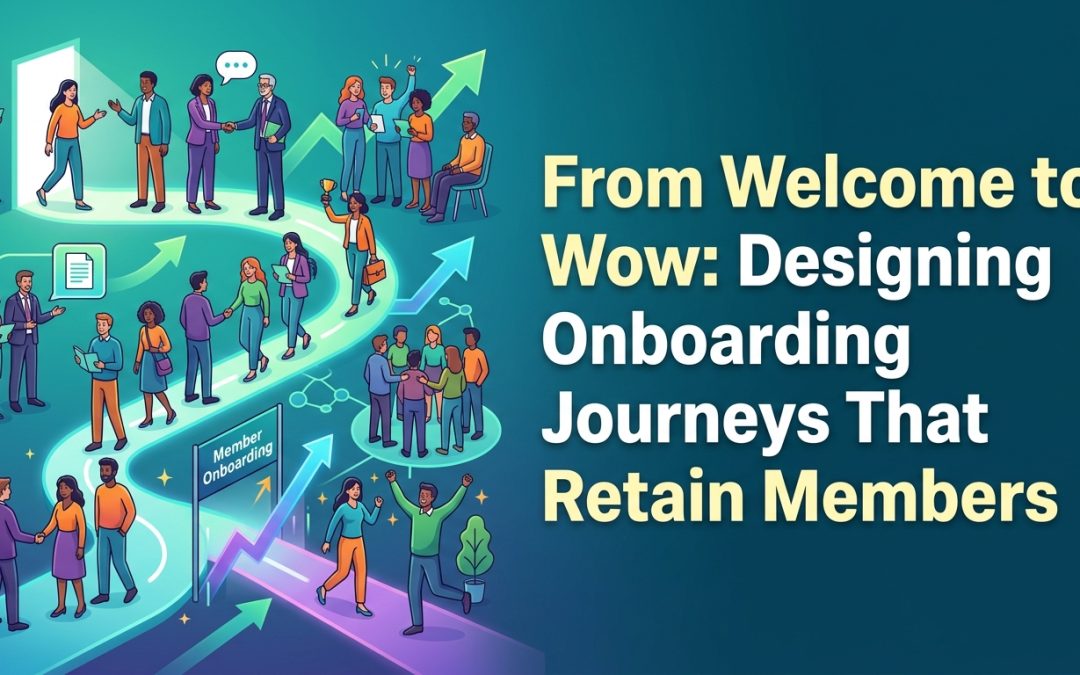
Why onboarding matters
Onboarding sets the tone for a member’s entire relationship with a product or service. A thoughtful journey moves people from curiosity to competence, and from initial interest to long‑term engagement. When new members feel supported, understood, and rewarded early on, they are more likely to stay, convert to paying plans, and become advocates. The best onboarding isn’t a single moment; it’s a carefully choreographed sequence that respects time, context, and goals.
Design principles that guide a great onboarding journey
Effective onboarding rests on a few core principles that translate across industries:
- Clarity: Tell users what to expect and what they’ll gain at each step. Clear paths reduce anxiety and hesitation.
- Relevance: Personalize guidance based on user role, goals, and prior experience. One size rarely fits all.
- Support without overwhelm: Offer just‑in‑time help, not a flood of tutorials. Batch learning into bite‑size, actionable steps.
- Value demonstration: Show quick wins early to prove the product’s worth and build confidence.
- Feedback loops: Invite input and adapt the journey as users progress.
A practical onboarding journey that sticks
Design a journey that guides members from first touch to confident usage with a mix of touchpoints and milestones:
- Warm welcome: A friendly message that acknowledges their goals and outlines what success looks like in the first week.
- Role- and goal-based paths: Segment onboarding by what the user wants to accomplish, not just what the product offers. Tailor steps accordingly.
- Guided setup: A concise, optional setup tour that highlights essential features and any required settings.
- Micro‑wins: Present small tasks that deliver tangible outcomes within minutes, then celebrate progress with helpful cues.
- Educational nudges: Deploy in‑product tips, short videos, or checklists that align with the user’s current stage.
- Community and support access: Provide quick routes to help—chat, forum, or a dedicated onboarding mentor—to reduce friction.
- Progress tracking: Show a clear roadmap or progress bar that updates as users complete steps and reach milestones.
Content and copy that propel activation
What you say matters as much as what you show. Focus on practical, outcome‑oriented language:
- Use verbs that imply action and results (e.g., “Create your first project,” “Connect your data,” “Save 20 minutes a day”).
- Frame benefits in user terms (how the feature helps them achieve their goals, not just what the feature does).
- Incorporate subtle social proof (examples, benchmarks, or short case notes) to reinforce value.
- Keep copy concise, scannable, and consistent with a warm, welcoming tone.
Measuring success and iterating
Onboarding is an ongoing experiment. Track both leading indicators and lagging outcomes to learn what works:
- Activation rate: The percentage of new members who complete a defined set of initial actions.
- Time to first value: How quickly a user experiences a meaningful outcome.
- Time to proficiency: The duration until a user can comfortably perform core tasks without help.
- Drop‑off points: Sections or steps where users frequently disengage.
- Net promoter score and qualitative feedback: Signals about satisfaction and likelihood to recommend.
Test hypotheses with controlled experiments—vary messages, steps, or visuals—and iterate based on data. A good onboarding program evolves with user needs and product changes.
Common pitfalls to avoid
Be mindful of these traps that can undermine onboarding:
- Overloading users: Too many features, too much content, or too long a tour. Prioritize what’s essential to reach first value.
- Rigid flows: One path fits all. Rely on flexible paths that adapt to user context.
- Poor handoffs: Gaps between onboarding and ongoing support. Ensure ongoing education and help are accessible.
- Neglecting accessibility: Ensure inclusive design so all members can participate from day one.
Conclusion: from Welcome to Wow
The goal of onboarding is to convert a welcome into a lasting wow moment—where members feel capable, connected, and motivated to return. By designing with clarity, relevance, and measurable progress, you turn first impressions into durable relationships. Start with a simple, value‑driven plan, collect feedback, and iterate. When onboarding is thoughtful and user‑centered, retention follows naturally—and so does a vibrant, engaged community of members.
Recent Comments