
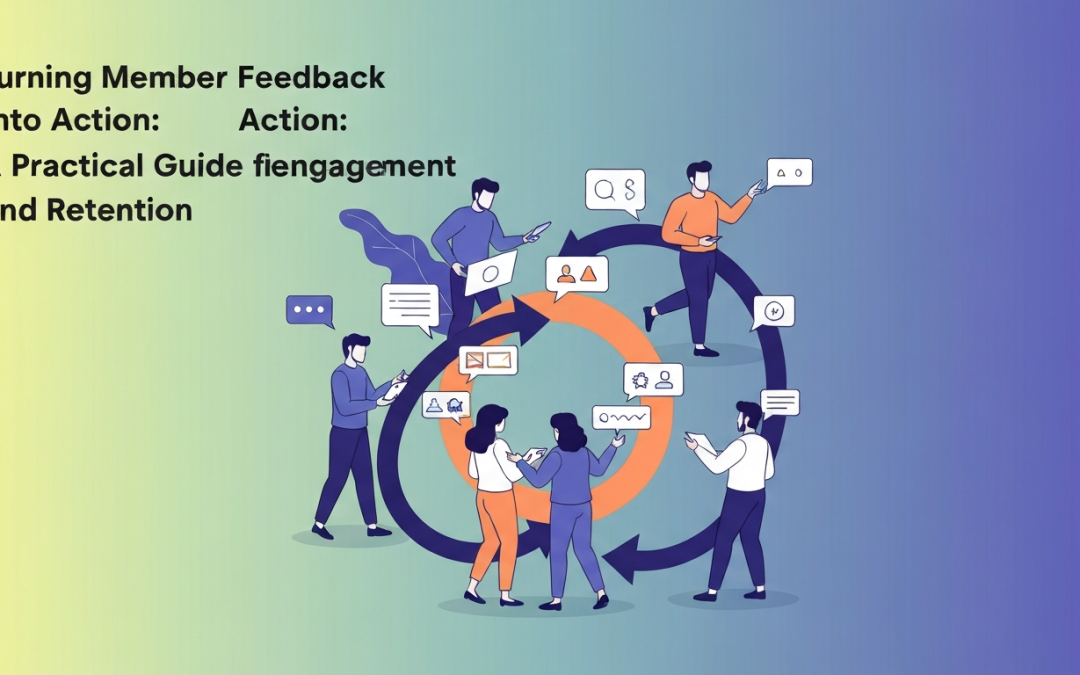
Introduction: Why turning member feedback into action matters
Member feedback is more than a collection of opinions—it’s a compass. When communities listen closely and translate insights into concrete improvements, engagement grows, trust deepens, and retention follows. This practical guide offers a clear, repeatable approach to transform feedback into actions that lift your entire community.
Capture signals with clarity
The first step is to design feedback channels that surface meaningful signals rather than noise. Consider a mix of methods that suit your audience and cadence:
- Short surveys after key interactions (events, onboarding, content purchases)
- Open feedback threads in forums or community spaces
- Occasional strategy check-ins with core member groups
- Behavioral data that reveals friction points (time to first post, feature usage)
Balance breadth and depth: aim for regular, actionable data rather than overwhelming amounts of input. Establish a lightweight scoring system to triage feedback by impact and effort.
Close the loop: acknowledge and validate
Members want to know their voices matter. Quick acknowledgment builds trust and sets expectations for follow-up. A practical approach includes:
- Public summaries of what you’re hearing and what you’re prioritizing
- Personal responses to individual feedback when appropriate
- Transparent timelines for when changes will be implemented
Validation doesn’t require perfect solutions on day one. It requires showing you heard, understood, and are acting with intent.
Prioritize with a simple framework
Not every suggestion can be acted on immediately. Use a lightweight prioritization framework to decide what to tackle first:
- Impact: How much will this improve engagement or retention?
- Reach: How many members will benefit?
- Effort: What is the required time and complexity?
- Strategic fit: Does it align with your community’s core goals?
Plot items on a two-axis grid (Impact vs. Effort) to create a candid roadmap. Start with quick wins that deliver noticeable value, then sequence medium and high-effort projects.
Turn feedback into actionable roadmaps
Translate insights into concrete initiatives with clear owners and milestones. A practical template:
- Problem statement: What member problem are we solving?
- Proposed solution: A concise description of the change
- Owner and timeline: Who is responsible and by when?
- Success metrics: How will we measure impact?
Documented roadmaps create alignment across teams and prevent projects from getting lost in the noise. Regularly review progress and adapt as needed.
Prototype, test, and iterate with members
Rather than shipping big-bang changes, adopt an iterative mindset. Use small experiments to test hypotheses before investing heavily:
- Run a pilot with a subset of users
- Collect quick feedback on the change
- Scale what works and sunset what doesn’t
Iterative cycles reduce risk, accelerate learning, and keep members engaged as co-creators in their community journey.
Measure what matters for engagement and retention
Choose a concise set of metrics that reflect both participation and loyalty. Consider:
- Engagement rate: active participants vs. total members
- Time-to-first-contribution: how quickly new members engage
- Retention rate: how many members stay after X months
- NPS or qualitative sentiment shifts after changes
Link metrics to specific initiatives to understand what drives lasting impact. Share results openly to reinforce trust and accountability.
Foster a culture of continuous listening
Turning feedback into action is not a one-off project but a cultural practice. Encourage ongoing listening by:
- Embedding feedback reviews into quarterly planning
- Celebrating wins that came from member input
- Providing ongoing opportunities for members to contribute ideas
When listening becomes a core habit, engagement compounds and retention strengthens as members feel truly valued and heard.
Recent Comments