
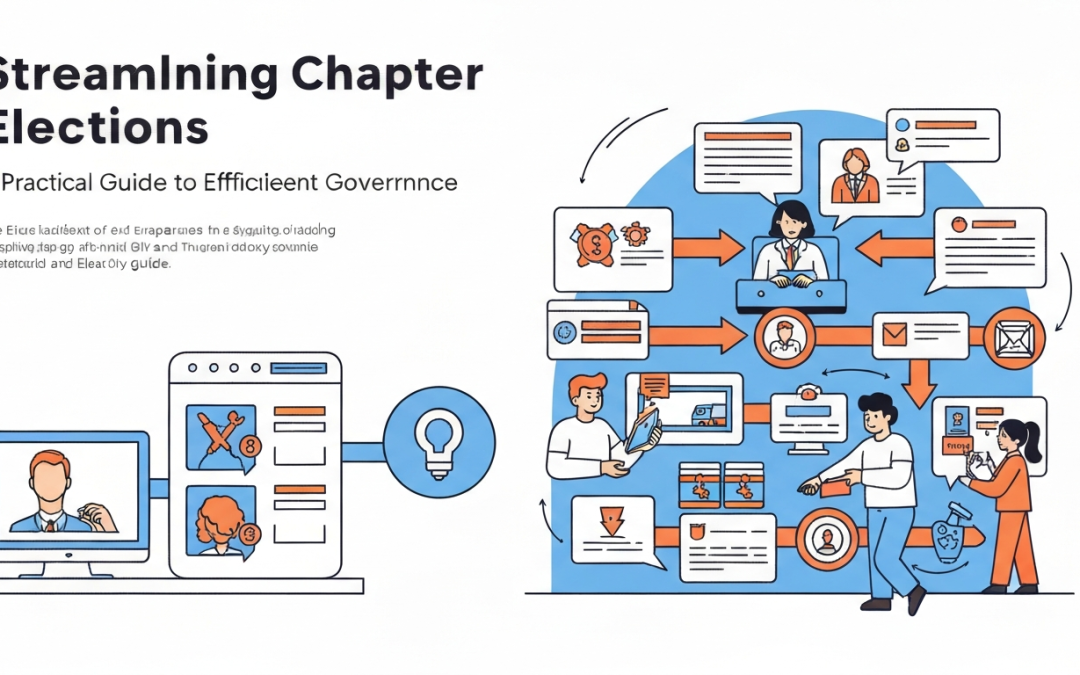
Streamlining Chapter Elections: A Practical Guide to Transparent, Efficient Governance
Why clear, efficient elections matter
Chapter elections are more than a ritual; they are the mechanism by which a community delegates authority, allocates resources, and sets priorities. When elections are muddled or opaque, distrust grows, participation dwindles, and decisions suffer from a lack of legitimacy. By prioritizing transparency and efficiency, organizations can preserve the integrity of the process while freeing up time and energy for governance that truly matters.
Foundational principles for transparent elections
To build a voting process that earns trust, anchor it in a few consistent principles:
- Open disclosure of roles, timelines, and rules so every member understands how the process works.
- Neutral administration that separates election logistics from political or factional intrigue.
- Accessible participation options, including clear guidance for new members and remote or flexible voting when possible.
- Timely, accurate results with a straightforward audit trail.
These pillars reduce confusion, lower barriers to participation, and create a culture of accountability that supports good governance beyond election day.
Practical steps to streamline the process
Use a phased approach that emphasizes clarity, responsibility, and simplicity:
- Define roles and responsibilities: Assign an independent elections committee, a clear chairperson, and documented owner for each task (nomination, verification, voting, counting, and certification).
- Publish a concise timeline: Post deadlines for nominations, eligibility checks, voting windows, and result announcements well in advance. Include reminders and escalation paths.
- Standardize forms and criteria: Develop uniform nomination forms, eligibility criteria, and conflict-of-interest disclosures to minimize ad-hoc decisions.
- Embrace accessible voting: Offer multiple voting methods (in-person, email, secure online portal) with robust authentication and fallback options.
- Automate what you can: Use simple software to track nominations, confirmations, ballots, and tallies, while preserving a transparent paper trail.
- Provide real-time updates: Share progress dashboards and periodic summaries to keep members informed and engaged.
- Plan for contingencies: Prepare procedures for disputed nominations, ballot errors, or technology outages, including a clear appeals process.
Ensuring integrity through verification and auditability
Integrity is earned by showing your work. Implement checks that are visible and verifiable:
- Independent tallying with a cross-check process and published method for calculating results.
- Seeded randomness for any draws or orderings, with auditable logs and explanations.
- Publicly accessible results summaries, including the number of ballots cast, turnout, and any deviations from the plan.
- Retention policies for ballots and records to facilitate post-election reviews if needed.
Engaging participants and building trust
Transparent governance thrives when members feel heard. Consider these engagement strategies:
- Pre-election information sessions to explain rules, candidate platforms, and the importance of fair play.
- Candidate Q&As and debates conducted with equal time and impartial moderation.
- Post-election debriefs that summarize what worked, what didn’t, and how improvements will be implemented.
- Feedback channels that allow anonymous input on the process and any concerns about integrity.
Case study: a hypothetical but practical implementation
Imagine a mid-sized association with 400 members. They implement a transparent, online portal for nominations and ballots, publish a step-by-step timeline, and appoint an independent elections oversight panel. Turnout rises from 28% to 62% within one cycle, due largely to clearer communication and easier participation. Result reporting includes a public tally by candidate, with a brief explanation of the counting method. The association also publishes a one-page post-election review, inviting member suggestions for future improvements.
Closing thoughts
Efficiency and transparency are not optional add-ons; they are essential elements of credible governance. By clarifying roles, standardizing procedures, and embracing accessible methods, chapters can run elections that accelerate momentum toward shared goals. When people trust the process, they participate more, and the decisions that follow are more widely embraced. Start small, document everything, and iteratively refine your approach to create a durable, trustworthy system for election governance.
Recent Comments