
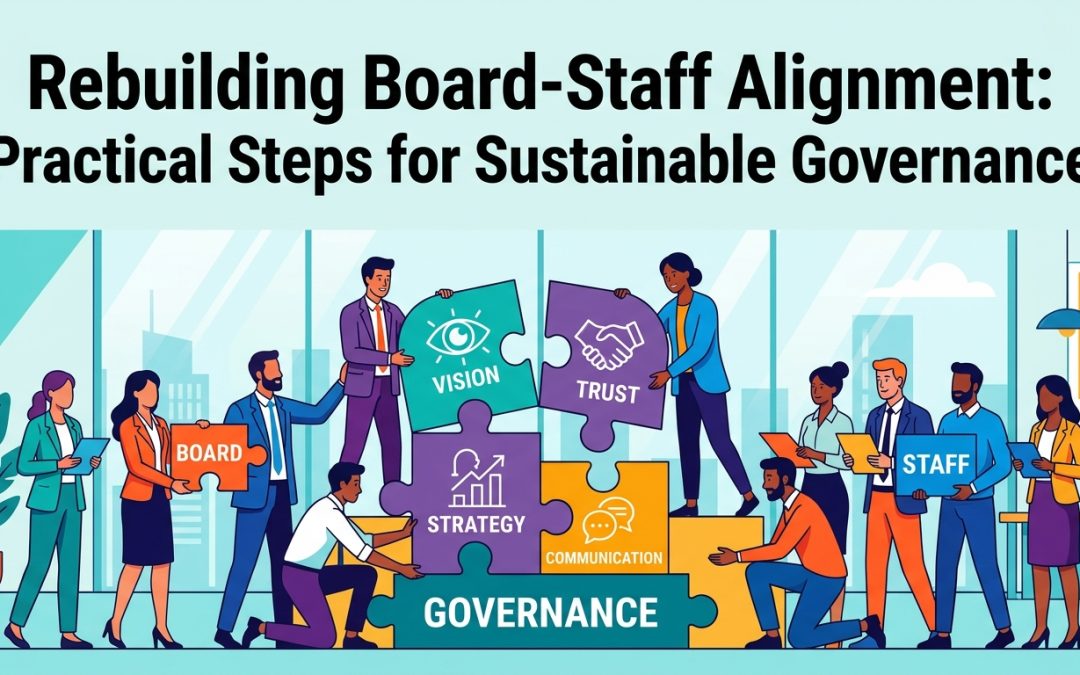
Why board-staff alignment matters
Every nonprofit and mission-driven organization relies on a shared understanding of goals, priorities, and processes. When boards and staff move in different directions, it creates confusion, drains resources, and weakens the impact of programs. Alignment isn’t a one-time event; it’s a continuous discipline that shapes decision-making, accountability, and trust with donors and communities.
Assessing current alignment
To begin rebuilding, leadership should first understand where gaps exist. A transparent assessment helps you design targeted interventions and measure progress over time.
- Cover the strategic plan: Are priorities clearly understood by both directors and staff? Do individuals reference the same metrics and milestones?
- Evaluate decision-making norms: Who approves budgets, programs, and personnel actions? Do processes feel fair and timely?
- Gauge communication patterns: Do information channels reach the right people at the right times? Is feedback welcomed and acted upon?
- Survey culture and trust: Do staff feel respected and included in strategic conversations? Do board members recognize operational constraints?
Practical steps to rebuild alignment
Below are concrete actions that can be implemented within a few weeks to a few months, with ongoing reviews to sustain momentum.
- Clarify the shared mission and strategy: Produce a concise, jargon-free summary of goals, priorities, and the rationale behind them. Ensure both board and staff signs off on the document.
- Define roles, responsibilities, and decision rights: Publish a decision rights matrix specifying who approves budgets, hires, program changes, and major expenditures.
- Establish regular, structured communication: Schedule routine briefing sessions, town halls, and written updates. Use a consistent cadence and an agreed-upon format for key reports.
- Set joint accountability mechanisms: Create a dashboard that tracks progress on strategic priorities and operational health metrics. Review it at every board meeting and leadership retreat.
- Invest in collaboration training: Facilitate sessions on constructive feedback, conflict resolution, and effective governance practices to build trust and reduce defensiveness.
- Align resource planning with strategy: Tie annual budgets and staffing plans directly to strategic priorities. Require cross-functional input when allocating resources.
- Encourage transparent conflict resolution: Establish a clear process for surfacing and addressing disagreements early, with a neutral facilitator when needed.
- Role-model ethical governance: Demonstrate accountability, openness, and consistent follow-through on commitments to demonstrate reliability.
Sustainable practices for ongoing governance harmony
Alignment is not a one-off fix. It requires rituals, documentation, and a culture that prioritizes shared purpose over individual win-wins. The following practices help sustain alignment over time.
- Seasonal alignment reviews: At least twice a year, revisit mission clarity, progress against milestones, and any external changes affecting the strategy.
- Board-staff retreats with concrete outcomes: Use retreats to workshop priorities, test assumptions, and agree on executive summaries that staff can translate into action.
- Transparent reporting: Move beyond financial statements to provide context on risks, opportunities, and program impact, so all stakeholders understand the full picture.
- Succession and continuity planning: Prepare for leadership transitions with documented processes, ensuring governance remains stable during changes.
- Inclusive decision-making: Create channels for frontline staff to contribute insights into strategy, while boards provide governance guardrails and oversight.
Measuring progress and sustaining impact
Effective alignment shows up in clearer decisions, faster execution, and stronger stakeholder confidence. Track progress with a simple framework: measure clarity, timeliness, and impact, then celebrate improvements and adjust when needed.
Conclusion
Rebuilding board-staff alignment is a deliberate, collaborative journey. By clarifying roles, strengthening communication, and embedding shared accountability, organizations can sustain governance that is both effective and resilient in the face of changing needs and constraints.
Recent Comments