
Overview: Why a cohesive member lifecycle matters
Growing a community or customer base isn’t just about acquiring new sign-ups. It’s about guiding people through a thoughtfully designed journey that delivers value at every touchpoint. When a member’s experience is intentional—from sign-up to advocacy—growth becomes a natural byproduct. This post outlines a practical framework to design that lifecycle and turn first-time users into loyal advocates.
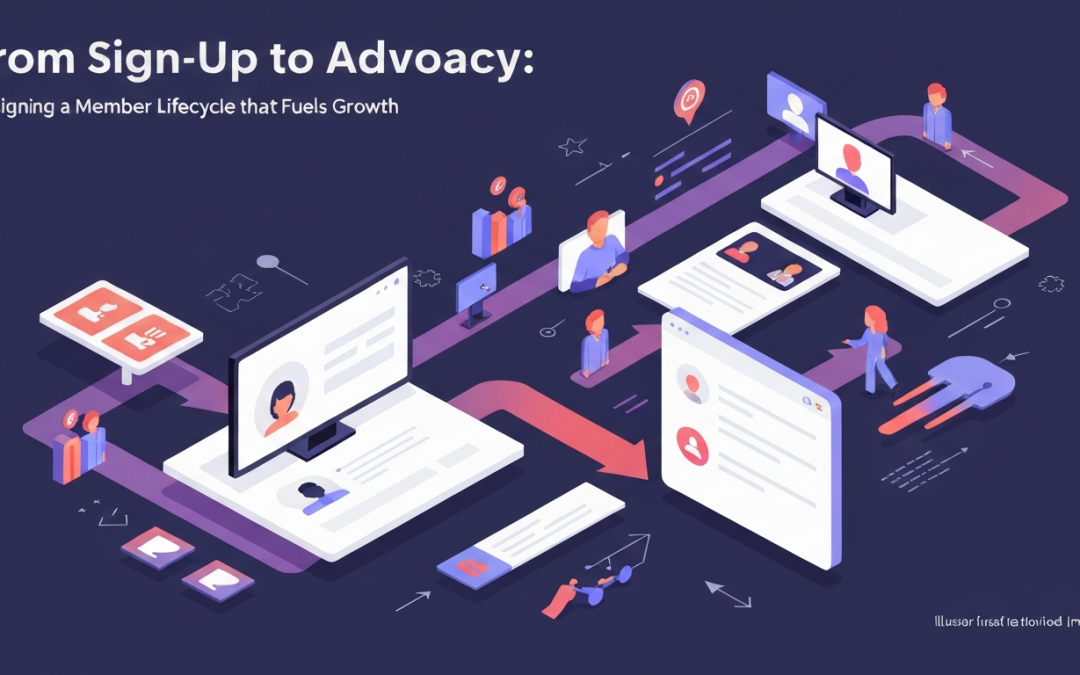
Mapping the lifecycle: stages and goals
Start by defining clear stages and the goals for each. A typical lifecycle might look like:
- Sign-Up: Low-friction entry and clear value proposition
- Onboarding: Quick wins and confidence in using the product or service
- Activation: Realized value and initial engagement
- Engagement: Consistent usage, deeper features, and community integration
- Retention: Long-term satisfaction and reliability
- Advocacy: Positive word-of-mouth, referrals, and social proof
Visualize this as a loop, not a straight line. Members should see momentum at every turn, with feedback loops feeding improvements back into earlier stages.
Sign-Up: Make a great first impression
The sign-up experience is your first chance to establish trust. Focus on:
- Low-friction enrollment with optional steps, not mandatory hurdles
- Immediate clarity about benefits and expected outcomes
- Social proof and a preview of what success looks like
- Privacy and control: transparent data usage and opt-in preferences
Communicate a single, compelling next action—one small win that proves value and reduces risk of abandonment.
Onboarding: Help members unlock value fast
Effective onboarding accelerates time-to-value. Consider a mix of guided tours, short tutorials, and self-service resources. Personalize where possible by aligning onboarding paths with member goals, industry, or role. Use milestones and progress indicators to create a sense of accomplishment.
Activation and early value: prove the promise
Activation is when a member experiences concrete benefits. Design for:
- Quick wins: features that deliver noticeable results within the first days
- Hands-on practice: guided tasks or sample workflows
- Relevant success metrics: show measurable impact (time saved, revenue impact, improved collaboration)
Offer a lightweight concierge option for power users who want a jumpstart, but avoid making it a required gate to progress.
Engagement and retention: sustain the relationship
Keep engagement meaningful rather than noisy. Strategies include:
- Personalized content and product tips based on usage data
- Regular check-ins or automated nudges that align with goals
- A community layer: forums, groups, or peer mentoring
- Consistent value delivery: updates, templates, or resources that matter
Respect boundaries and avoid message fatigue by allowing members to tailor communication frequency and channels.
Advocacy: turn fans into champions
Advocates fuel growth because they bring credibility and network effects. Encourage advocacy through:
- Referral programs with clear incentives and easy sharing
- Customer stories and co-created case studies
- Recognition, such as awards, badges, or exclusive access
- Easy feedback loops so advocates feel heard and influential
Make it effortless for members to advocate without feeling spammed or commodified.
Metrics that matter: measuring the lifecycle impact
Track a balanced set of metrics across stages:
- Signup-to-activation conversion rate
- Time-to-value and time-to-first-success
- Usage depth, feature adoption, and engagement frequency
- Retention rate, churn reasons, and cohort analysis
- Advocacy signals: referrals, reviews, and user-generated content
Align dashboards with goals for each stage and use experiments to optimize weak links in the chain.
Experimentation and iteration: keep refining the journey
A living lifecycle requires ongoing testing. Implement small, trackable experiments such as:
- A/B testing onboarding copy or the first value proposition
- Different onboarding paths based on user segments
- Timing and content of engagement nudges
Capture learnings, retire the underperforming ideas, and scale the successful ones.
Conclusion: a cohesive growth engine
A member lifecycle designed with intention turns initial sign-ups into sustained engagement and enthusiastic advocacy. By mapping stages, delivering fast value, personalizing experiences, and measuring the right metrics, you create a growth engine where each phase feeds the next. Start with a clear map, empower your team to iterate, and invite your members to grow alongside you.
Recent Comments