
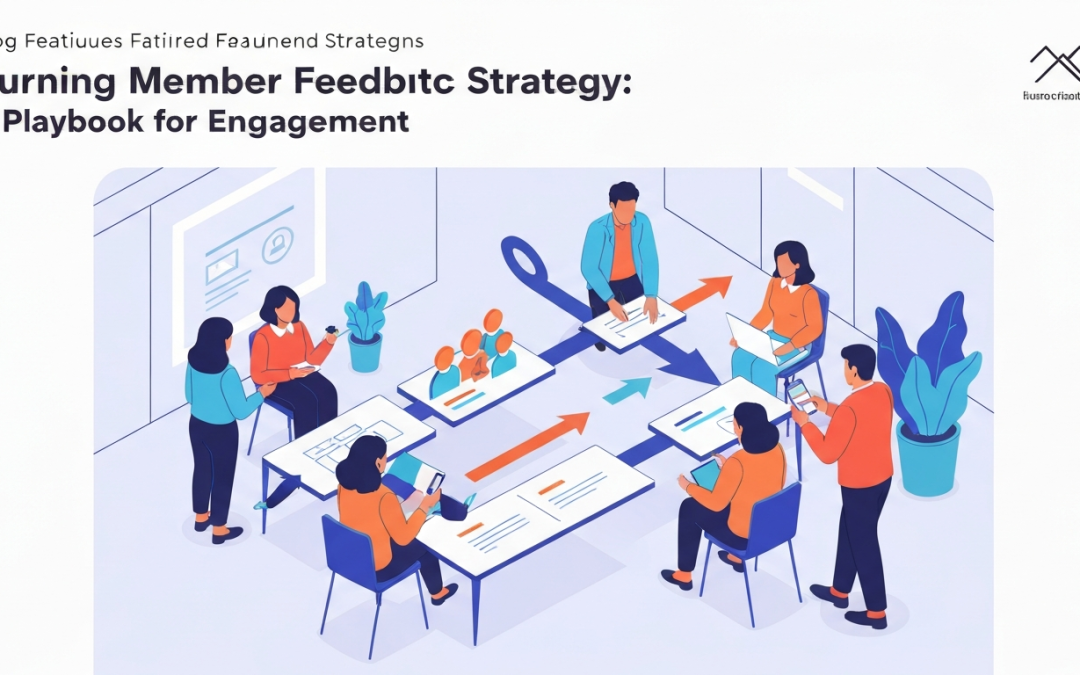
Listening as a strategic practice
Member feedback is more than a courtesy or a one-off survey. It is a strategic input that reveals what matters most to your audience, where you exceed expectations, and where you fall short. The key is to treat feedback as a living resource that informs decisions, priorities, and experiments. A clear playbook helps teams move from reaction to iteration, turning voices into decisive action.
Where to collect feedback
To build a robust feedback loop, cast a wide net while staying organized. Consider a mix of qualitative and quantitative signals:
- Surveys and polls sent after events, onboarding, or milestones
- Direct messages, support tickets, and forum discussions
- Usage analytics and engagement metrics
- Net Promoter Score (NPS) and customer satisfaction (CSAT) ratings
- Community feedback sessions, focus groups, and beta programs
Centralize the inputs in a single repository or dashboard so the team can see trends over time and correlate feedback with outcomes.
Turning data into insights
Raw feedback helps you understand what happened, but insights reveal why it happened and what to do next. A disciplined analysis approach includes:
- Clustering similar feedback into themes (onboarding, feature gaps, performance, communication)
- Identifying critical incidents vs. evolving trends
- Prioritizing based on impact, effort, and alignment with strategic goals
- Cross-functional interpretation with product, success, and community teams
Documenting a few representative quotes alongside quantitative signals can illuminate the user story behind the numbers.
From insights to strategy
Insights should translate into concrete strategy. Create a simple framework that connects themes to outcomes:
- Strategic objective (what you want to achieve)
- Key initiative (a focused action or project)
- Success metrics (how you’ll know it worked)
- Owner and timeline (who executes and by when)
Limit the number of active initiatives to maintain focus. Each initiative should clearly address a top pain point and have a measurable horizon.
Prioritization that sticks
With many insights, teams must decide what to tackle first. A practical approach combines impact with feasibility:
- Impact assessment: which changes will move the needle for most members?
- Effort assessment: what resources, risk, and complexity are involved?
- Dependency mapping: what must precede other work?
- Experiment readiness: can we test hypotheses quickly and cheaply?
Visualize the pipeline in a living roadmap that is revisited in regular planning sessions. Communicate trade-offs transparently to maintain trust with members and stakeholders.
Experimentation and learning
Turn strategy into repeatable experiments. Each initiative should include a test plan with clear hypotheses, success criteria, and a learning agenda. Key practices include:
- A/B tests, pilots, or phased rollouts to minimize risk
- Defined metrics for both success and learning (what you’ll stop if it doesn’t work)
- Qualitative feedback loops after each iteration to capture nuance
- Flexible cadences that allow pivoting when data demands it
Document decisions and outcomes so future teams can reuse patterns and avoid past mistakes.
Governance and cadence
A sustainable feedback-to-strategy engine requires clear governance. Establish roles, rituals, and timings that create accountability without stifling experimentation:
- Feedback owners who curate inputs and translate them into opportunities
- Quarterly strategy reviews aligned with product roadmaps
- Monthly check-ins to track experiments, learnings, and adjustments
- Public dashboards or newsletters for ongoing transparency with members
Consistency builds trust: members see that their voices matter, and teams gain a reliable rhythm for improvement.
Measuring impact and sharing impact
Close the loop by assessing how actions influenced member experience and outcomes. Consider both leading indicators (early signals) and lagging indicators (after-effects):
- Engagement and retention metrics
- Feature adoption and usage depth
- NPS shifts and sentiment change
- Qualitative stories of member success and frustration resolved
Share impact stories across the organization. Concrete wins—like a streamlined onboarding flow or a requested feature released—reinforce the value of listening and acting on member feedback.
Recent Comments