
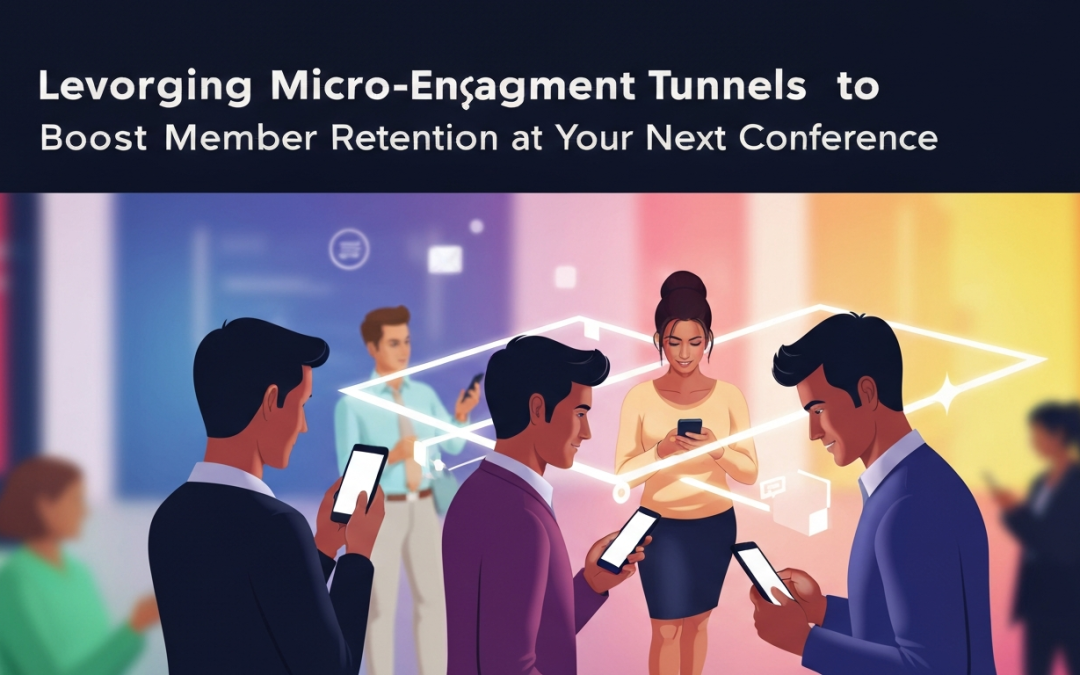
Why micro-engagement matters
In the world of conferences and professional communities, that initial spark of interest can fade quickly. Micro-engagement tunnels are small, deliberate interactions that guide attendees from curiosity to ongoing involvement. Rather than chasing a single big moment, you build a sequence of meaningful, low-friction touchpoints that compound over time. The result is higher attendee satisfaction, stronger sense of belonging, and improved retention from year to year.
Designing micro-engagement tunnels for conferences
Think of a tunnel as a series of connected moments, each carefully crafted to advance a member toward deeper involvement. Start with clarity on the desired outcome for each touchpoint and map the attendee journey from awareness to advocacy. A well-designed tunnel should be:
- Accessible: low effort to participate, available across devices and time zones
- Personalized: context-aware messages based on interests, roles, or session choices
- Value-driven: offering useful content, connections, or opportunities
- Measurable: trackable with clear metrics to optimize over time
Examples of micro-engagement touchpoints
In practice, these small interactions add up. Consider the following touchpoints you can weave into your conference experience:
- Pre-event interests: a micro-survey that reveals topics attendees care about, followed by tailored session recommendations
- On-site prompts: QR codes on signs that unlock short interviews with speakers or quick polls
- During sessions: interactive polls, live Q&A, and post-session summaries delivered via text or email
- Networking nudges: curated attendee matches based on goals, with a 5-minute icebreaker guide
- Post-session micro-content: bite-sized takeaways, checklists, or templates delivered within 24 hours
- Community onboarding: a lightweight welcome carousel in the app that introduces groups, channels, and norms
Tools to enable micro-engagement at scale
Implementing these ideas requires a practical toolbox. Consider:
- Event app with push notifications and in-app messaging
- Simple surveys and quick polls integrated into sessions
- Automated follow-ups: short emails or messages that reference specific interests
- Smart agendas that surface relevant connections and content
- Moderated communities or interest groups to sustain dialogue after the event
Measuring success and iterating
To ensure your micro-engagement tunnels deliver results, monitor both engagement and outcomes. Focus on these indicators:
- Engagement rate per touchpoint (open rates, click-throughs, poll participation)
- Time-to-commit indicators (how quickly attendees join a group, book a follow-up, or access resources)
- Retention signals (repeat attendance, membership renewals, or continued participation in events)
- Net promoter signals (likelihood to recommend the event or community)
Use A/B tests to compare messaging, timing, and content formats. Capture qualitative feedback through short post-touchpoint surveys to refine the experience. The goal is a feedback loop where data drives small, iterative improvements before the next conference cycle.
Implementation plan for your next conference
Turn the concept into action with a simple, repeatable plan:
- Define 3–5 micro-engagement goals aligned with your program objectives
- Audit existing touchpoints and identify gaps where attendees lose momentum
- Design 4–6 micro-interactions for the pre-event, on-site, and post-event phases
- Choose tools that can automate and personalize interactions at scale
- Set up metrics dashboards and assign ownership for ongoing optimization
With a disciplined approach to micro-engagement, your next conference can become more than a single event. It can be the start of a continuing relationship that grows every year, turning curious attendees into loyal members and active contributors. Start small, measure carefully, and let the data guide you toward a more connected, durable community.
Recent Comments