
Introduction
Onboarding is more than a first impression—it’s a long-term investment in member value. The goal is to guide new members from curiosity to confidence, so they experience meaningful benefits early and stay engaged over time. Redesigning onboarding isn’t a one-size-fits-all tweak; it’s a deliberate, data-informed playbook that aligns product, content, and community around a single promise: every new member should feel successful in their first 30, 60, and 90 days.
Goals and Metrics
To build an onboarding that sticks, start with clear outcomes and measurable signals:
- Activation: the proportion of new members who complete a core action within the first week.
- Time to first value: how quickly a member experiences a meaningful benefit.
- Engagement velocity: daily or weekly active use after sign-up.
- Retention: 30-, 60-, and 90-day retention rates.
- NPS or qualitative sentiment: early feedback on onboarding clarity and usefulness.
Set specific targets, track them, and iterate. The onboarding playbook should evolve as member needs change and the product expands.
The Playbook: Core Phases
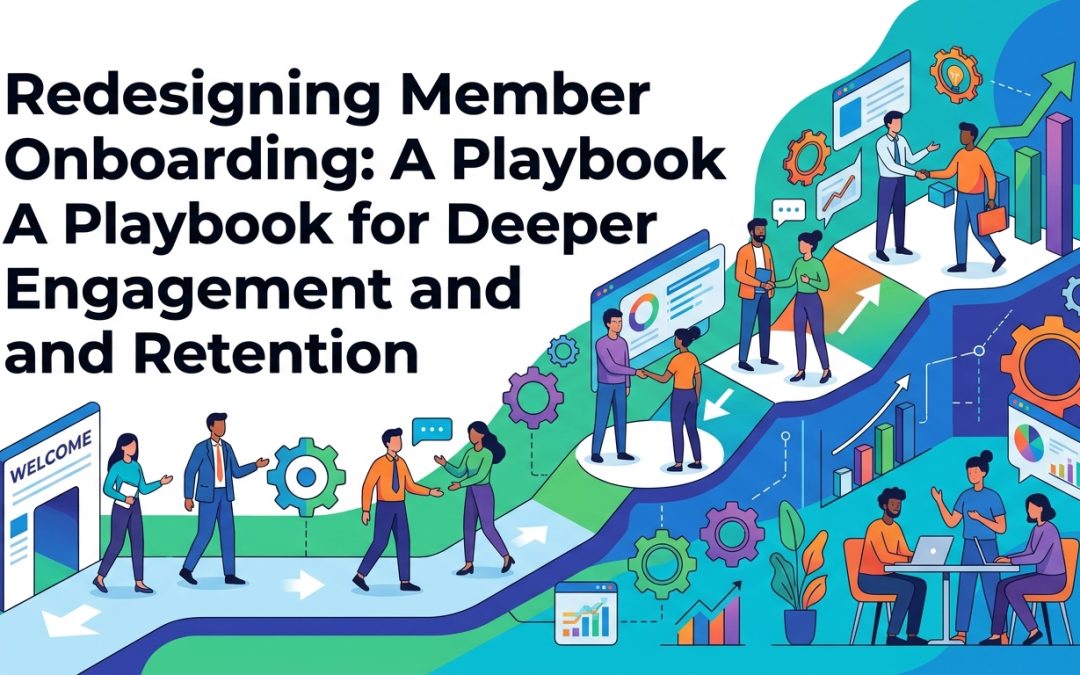
Redesigning onboarding works best when you segment the journey into three phases: Welcome and Orientation, Early Value Realization, and Community Engagement. Each phase has goals, signals, and reusable assets.
- Welcome and Orientation: Onramp that reduces friction and clarifies expectations. Deliver a succinct value proposition, a guided tour, and a list of immediate next steps.
- Early Value Realization: Help members experience the first tangible outcome within days. Provide practical tasks, templates, or workflows that demonstrate the product’s benefit.
- Community Engagement: Encourage interaction with peers, mentors, or experts. Foster belonging through groups, events, and ongoing support.
Key Touchpoints and Experience Design
Design touchpoints that feel personal, not automated. Map the onboarding flow and annotate where friction tends to occur. Consider these components:
- Account setup: streamline signup and prefer progressive disclosure over information overload.
- Guided onboarding: a lightweight, task-based tour that unlocks features as they’re needed.
- Early value prompts: nudges that highlight outcomes, not features.
- Resource library: concise, value-driven content—checklists, templates, walkthroughs.
- Support channels: quick access to help and a feedback loop for continuous improvement.
- Community invitations: low-friction paths to join relevant groups or cohorts.
Content and Experience Assets
Well-crafted content accelerates learning and preserves the member’s momentum. Build a library that scales with your product and community:
- Short, action-oriented onboarding emails and in-app messages.
- Video micro-tutorials and quick-start guides.
- Role-based or use-case based checklists.
- Templates and samples that demonstrate real-world value.
- FAQ and troubleshooting resources that grow from common inquiries.
Always favor clarity, concrete outcomes, and examples over bloated explanations. Test different formats (text, video, interactive) to learn what resonates.
Implementation Roadmap
Turn the playbook into reality with a phased plan and clear ownership:
- Phase 1: Audit and baseline. Map current onboarding, collect qualitative feedback, and identify bottlenecks.
- Phase 2: Design. Create a cohesive onboarding storyboard, update copy, and develop assets.
- Phase 3: Build. Implement in-product flows, install onboarding analytics, and prepare launch materials.
- Phase 4: Launch and learn. Run a controlled rollout, monitor metrics, and gather member quotes.
- Phase 5: Iterate. Optimize based on data, experiment with variations, and scale successful patterns.
Measurement and Optimization
Onboarding progress should be visible to the whole team. Use dashboards that track activation, time-to-value, and early engagement. Combine quantitative data with qualitative feedback from new members to uncover hidden pain points. Schedule quarterly reviews to refresh goals and experiments.
Common Pitfalls to Avoid
- Overloading new members with content. Prioritize bite-sized tasks that deliver quick wins.
- Unclear value proposition. Lead with outcomes that matter to real use cases.
- Neglecting onboarding for power users. Provide advanced paths for sophisticated needs while maintaining a gentle initial arc.
- Treating onboarding as a one-off event. Design for ongoing value and evolving touchpoints.
Next Steps
If you’re ready to start redesigning onboarding, assemble a cross-functional team, define two to three key activation metrics, and begin with a minimal viable onboarding flow. Test, learn, and scale. When members quickly reach value and feel connected to a community, engagement and retention follow naturally.
Recent Comments