
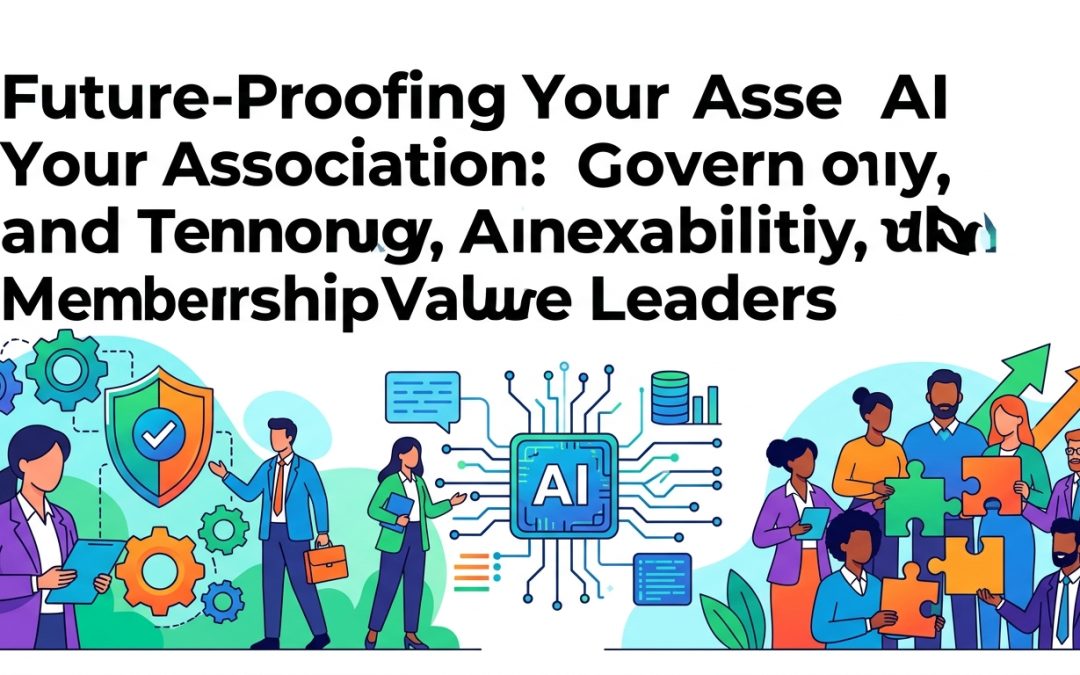
Why AI Is Redefining Association Governance
Across associations worldwide, artificial intelligence is no longer a futuristic concept—it’s a practical tool that reshapes how committees operate, how decisions are made, and how members experience value. The core opportunity is not replacing human leadership but augmenting it with data-driven insights, faster workflows, and more inclusive participation. By viewing governance as a living system that learns, adapts, and improves, leaders can build resilience against disruption and create a more meaningful sense of belonging for members.
Building a Technology-Driven Governance Framework
A robust framework begins with clarity about goals, roles, and accountability. Technology should serve governance, not complicate it. Start with these steps:
- Define strategic priorities: Identify the outcomes you want to achieve—improved transparency, faster decision cycles, or better member engagement.
- Adopt an ethical AI mindset: Establish guardrails on data privacy, bias, and fairness, and ensure human oversight remains central.
- Pilot with purpose: Run small, controlled experiments to test AI-assisted processes such as meeting scheduling, data dashboards, or issue triage.
- Invest in accessibility: Ensure platforms are intuitive, multilingual where needed, and accessible to members with diverse needs.
Technology should simplify governance tasks—consent management, agenda preparation, risk assessment, and performance tracking—while empowering volunteers to focus on strategy and member impact rather than admin minutiae.
Enhancing Member Value Through Personalization and Transparency
Members seek outcomes that reflect their needs and voices. AI can unlock personalized learning experiences, tailored communications, and transparent reporting on how resources are used. But personalization must respect diversity of interests and avoid creating echo chambers. Consider these approaches:
- Smart content delivery: Use AI to curate relevant news, events, and educational resources based on member roles, sectors, and past engagement.
- Transparent dashboards: Provide dashboards that show how membership dues are allocated, program impact, and governance milestones in clear, jargon-free language.
- Inclusive engagement: Facilitate broad participation by offering multiple channels for feedback, including asynchronous forums, live sessions, and surveys.
- Proactive risk signaling: AI can flag emerging issues, member sentiment shifts, or compliance concerns before they escalate.
Operationalizing AI Ethically and Effectively
Ethics and practicality must go hand in hand. A thoughtful approach to AI reduces risk and builds trust among members and staff:
- Data governance: Create a data inventory, establish data owners, and implement data quality controls and retention policies.
- Human-in-the-loop: Design processes where humans review AI outputs, especially for governance decisions, to maintain accountability and context.
- Bias mitigation: Regularly audit AI models for bias and diversify data sources to avoid skewed recommendations.
- Security culture: Train volunteers and staff on cyber hygiene, phishing awareness, and secure access controls.
Practical Roadmap for Associations
Implementation does not have to be overwhelming. A phased roadmap keeps momentum without overcommitting resources:
- Phase 1: Discovery – map governance goals, identify friction points, and select two high-impact pilot areas.
- Phase 2: Enablement – deploy lightweight AI tools, establish data policies, and train volunteers on new workflows.
- Phase 3: Expansion – scale successful pilots, integrate with existing platforms, and publish transparent impact reporting.
- Phase 4: Optimization – continuously measure outcomes, solicit member feedback, and iterate governance practices.
Measuring Success: What to Track
Beyond participation numbers, focus on indicators that reflect value and governance health:
- Decision speed and quality
- Member satisfaction and trust scores
- Engagement breadth across member segments
- Compliance, risk indicators, and incident response times
- Transparency metrics, such as data disclosure and governance reporting cadence
A Forward-Lacing Vision for Associations
The age of AI offers an invitation to rethink who benefits from association life and how. When governance becomes a learning organism supported by thoughtful technology, member value increases, trust deepens, and the organization remains relevant in a rapidly changing world. The key is to balance automation with human insight, safeguard ethics with bold experimentation, and keep the focus on outcomes that matter to real people—the members who give life to the association.
Recent Comments